
Invoice Vs Estimate: What Each Document Means
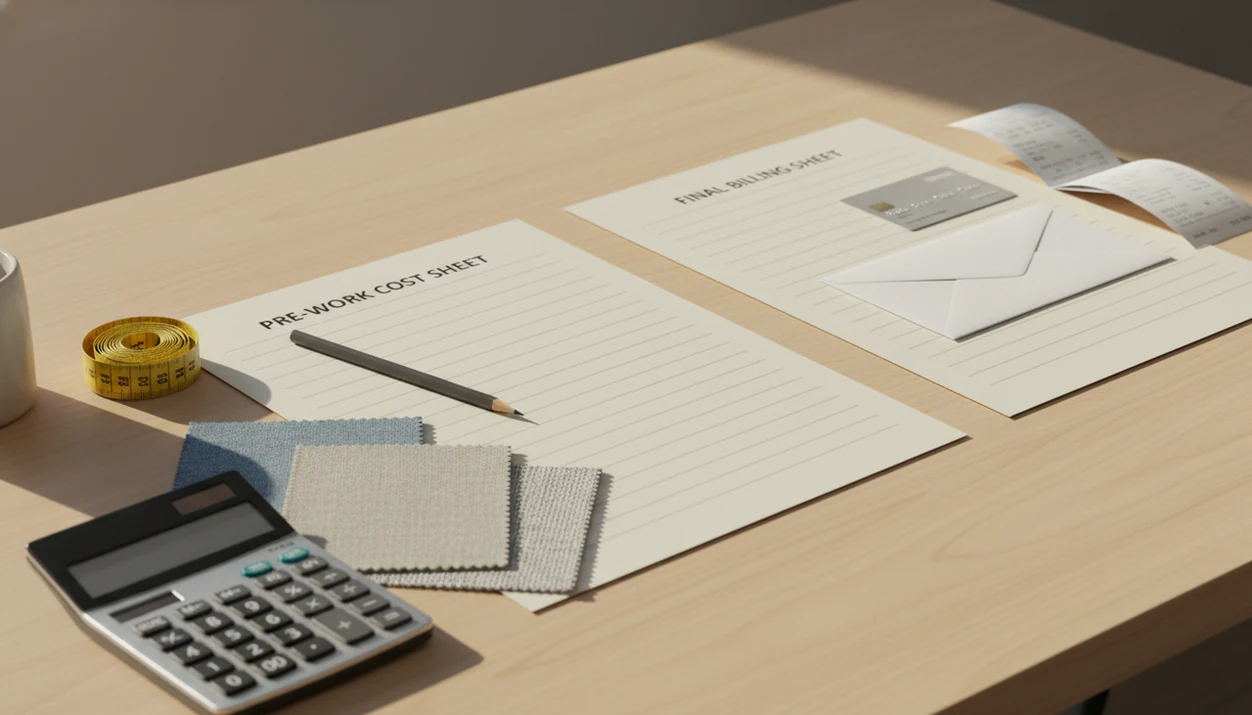
Invoice vs estimate comes down to timing and obligation: an estimate is a pre-work cost projection, while an invoice is a post-work request for payment. Service businesses use estimates to set expectations before a job and invoices to collect the final amount owed after work is delivered. Invoice Maker Teo supports both sides by letting a business create an estimate first, then turn the accepted version into an invoice with the same line items and client record.
An estimate predicts possible job costs before approval, while an invoice records the final amount due and asks the client to pay.
- Send an estimate before work begins so the client can review scope, budget, and likely cost.
- Send an invoice after delivery, completion, or a milestone so the client knows what to pay and when.
- Use the same app for both when possible, because converting an accepted estimate into an invoice reduces retyping, pricing errors, and missing records.
Invoice vs estimate, side by side
Side-by-side captures of the compared products. Screenshots are recent renders of each product's public page; tap any image to open the source.
Invoice vs estimate at a glance
An estimate is a pre-work document that gives an approximate price and scope. An invoice is a post-work payment request for the final amount owed.
| Comparison point | Estimate | Invoice |
|---|---|---|
| Timing | Sent before work starts | Sent after delivery, completion, or a milestone |
| Main purpose | Helps win approval | Helps collect payment |
| Amount | Approximate and subject to change | Final amount due |
| Legal weight | Usually not binding by itself | Formal payment record |
| Accounting impact | Usually not entered as receivable | Becomes accounts receivable for the seller |
| Client action | Review, approve, reject, or request changes | Pay by the due date |
The practical difference shows up fast on a job site. A ladder shadow across cracked concrete is estimate time. A finished repair with the total due is invoice time.
Good invoice maker apps for freelancers and small businesses create, send, and track invoices and estimates, not full enterprise accounting systems.
Five facts about estimate vs invoice documents
Estimate vs invoice documents differ by timing, obligation, records, and payment status. These five facts cover the billing distinction most service businesses need.
- An estimate is created before work starts and can change when scope, time, or materials change.
- An invoice is created after goods or services are delivered, or after an agreed milestone is reached.
- Estimates are usually not legally binding unless they are attached to a signed agreement, accepted terms, or contract language.
- Invoices are formal payment records and are generally enforceable in normal business contexts.
- Estimates usually do not enter accounting ledgers, while invoices become accounts receivable for the seller.
After a client says, “Can you resend that invoice?”, the difference stops being academic. The phone check is real. Invoice Maker Teo fits that unpaid-status moment because the client record, PDF copy, and payment status stay tied to the same job.
What an estimate means before a service job
An estimate is a pre-approval document that explains what a job may cost, what work is included, and what assumptions the price depends on.
In plain English, the estimate is the planning document. It usually includes client details, a service description, projected labor, materials, optional terms, an expiration date, and job assumptions. A contractor might write “patch two wall sections, paint excluded” so the client does not expect a full room repaint later.
Scope boundaries matter. Add change approval language when the price depends on hidden damage, extra hours, or materials that may shift. Invoice Maker Teo helps here by saving services, prices, notes, and client details, so the next estimate starts from clean fields instead of last year’s customer tab in a spreadsheet.
Contractors comparing setup options can also use a best estimate maker app guide when quotes are the main workflow.
What an invoice means after work is delivered
An invoice is a payment document sent after work is completed, delivered, or billed at an agreed milestone.
The invoice is the payable record. It should include an invoice number, invoice date, seller and client details, itemized services, taxes or discounts if applicable, total due, due date, and payment terms. A missing invoice number or yesterday’s copied due date can slow payment more than people expect.
Clear terms matter because late payment and cash-flow pressure are common for small businesses: 55% of U.S. employer firms reported cash-flow problems in the Federal Reserve’s 2023 Small Business Credit Survey, which covers 2022 firm conditions (https://www.fedsmallbusiness.org/survey/2023/report-on-employer-firms).
If payment follow-up is the main pain, Invoice Maker Teo is a practical fit because it keeps invoice status visible after the PDF has been sent through Gmail, Outlook, WhatsApp, or Messages.
How invoice vs estimate workflows work
Invoice vs estimate workflows move from request to record: request, estimate, client approval, work, changes, invoice, payment, and follow-up. The estimate captures assumptions; the invoice captures the final payable record.
The workflow uses a basic document lifecycle. In plain terms, one document sets the expected cost before approval, and the next records what is actually owed. If a client approves a patio repair estimate, then adds another cracked section, the change should be noted before the final invoice goes out.
Invoice Maker Teo is an example of a mobile app that creates invoices, estimates, PDFs, reminders, and payment tracking for freelancers and small businesses. After a late-night desk session with cold tea and design mockups open beside invoice notes, conversion matters because the accepted estimate can become an invoice without rebuilding every line item.
A focused app that turns estimates into invoices is useful when repeat typing is where mistakes start.
How to use invoices and estimates together
Use estimates and invoices together by treating the estimate as the approved plan and the invoice as the final payment request. Keep the client name, line items, and terms consistent across both documents.
- Set the scope, assumptions, materials, and expiration date before sending the estimate.
- Send the estimate as a PDF copy so the client can review the price and work description.
- Get written approval by email, message, signature, or accepted estimate before starting work.
- Update the estimate if the job changes before billing.
- Convert the accepted estimate into an invoice after completion or milestone delivery.
- Track payment status and send reminders when the due date passes.
If the issue is quoting from the field, Invoice Maker Teo fits because saved customers, item lists, taxes, and notes reduce the chance of a formula error glowing red at night. For a phone-first walkthrough, use how to create estimate on phone.
When to choose an estimate vs invoice
Should you send an estimate or an invoice? Before approval equals estimate; after delivery equals invoice.
Send an estimate when price is not final
Send an estimate when the client is still deciding, the scope needs approval, or the price depends on labor, materials, or access. A pricing request is not a payment obligation. It is an invitation to define the work.
Send an invoice when payment is due
Send an invoice when work is complete, goods are delivered, or an agreed payment milestone has been reached. For milestone billing, the invoice can be sent before the whole project ends if the agreement allows that stage payment.
For service businesses, an estimate is often safer before work starts because it documents scope before money is owed. Invoice Maker Teo supports that handoff by preserving accepted estimate details when the final invoice is created. The estimate to invoice timeline explains that sequence in more detail.
Common myths about invoice vs estimate rules
Invoice vs estimate confusion often comes from treating both documents like the same form with different labels. They are related, but they do different jobs.
Mini-invoice myth: An estimate is not a mini-invoice because it does not ask the client to pay now.
Locked-price myth: An accepted estimate can change if the scope, time, or materials change, but the change should be documented.
Polite-reminder myth: An invoice is not just a nudge. It is a formal payment record with a due date and amount owed.
Skip-the-estimate myth: Small businesses can send detailed invoices, but skipping estimates can create disputes about what was approved.
Legal treatment varies by jurisdiction and contract terms. For recordkeeping context, the IRS tells businesses to keep documents that support income, deductions, and credits, including sales slips, paid bills, invoices, receipts, deposit slips, and canceled checks (https://www.irs.gov/businesses/small-businesses-self-employed/recordkeeping). FreshBooks, Wave, Zoho Invoice, and Invoice2go all discuss billing workflows, but the same caution applies anywhere. An app can organize documents; it cannot decide contract law.
Evidence and sources for invoice vs estimate rules
The evidence behind invoice vs estimate rules is mostly practical accounting, cash-flow research, and contract context. Estimates help plan work; invoices create the receivable record that sellers track for payment.
Accounting guidance generally treats an estimate as a quote or projection until work is approved and performed, while an invoice supports accounts receivable after goods or services are delivered. Late-payment and cash-flow data also support the practical side: small firms often need cleaner due dates, status tracking, and follow-up because delayed payment can strain cash on hand. Legal enforceability is the separate question. It depends on the contract terms, acceptance, local law, and the facts around the job, not the document title alone.
- Separate the factual rule first: estimate before approval, invoice when payment is due.
- Check whether the estimate was accepted, changed, or attached to contract terms.
- Record invoices as receivables only when the business has earned the right to collect.
- Use app workflow advice, including conversion and reminders, as operational help rather than legal proof.
- Name competitor guidance only when pointing readers to the exact source page, not as a loose authority.
Limitations
Invoices and estimates make billing clearer, but they do not remove every business risk. The document is only as good as the agreement behind it.
- An estimate remains an approximation even when it includes detailed labor, materials, and scope notes.
- An invoice does not guarantee on-time payment. Some clients still pay late or do not pay.
- Enforceability depends on country, contract law, and the surrounding agreement.
- Apps streamline documents, but they cannot fix unclear scope, bad pricing, or weak client communication.
- Estimates alone may not replace signed contracts, change orders, insurance documents, or legal advice.
- Invoice Maker Teo helps create PDFs, reminders, and payment tracking, but it is not a tax filing service or law firm.
- A paid invoice opened at the counter is useful evidence for records, but bank deposits and bookkeeping still need review.
When follow-up is the problem, an invoice payment tracking app helps separate sent, unpaid, and paid invoices without digging through email threads.
FAQ
Is an estimate a bill?
No. An estimate is not a bill because it shows a projected cost before work is approved and does not request payment.
Is an invoice legally binding?
An invoice is a formal payment record, but enforceability depends on the underlying agreement, local law, and the facts around the work.
Can an estimate become an invoice?
Yes. An accepted estimate can be converted into an invoice after work is delivered or an agreed milestone is reached.
When should I send an estimate?
Send an estimate before work begins, especially when the client needs to approve price, scope, materials, or timing.
When should I send an invoice?
Send an invoice after completion, delivery, or an agreed payment milestone when the client owes money.
Can an estimate price change?
Yes. An estimate total can change when scope, time, or materials change, preferably with written approval before invoicing.
Do estimates affect accounting records?
Estimates usually do not enter accounting ledgers. Invoices become receivables for sellers or payables for buyers.
What should an invoice include?
An invoice should include an invoice number, seller and client details, line items, total due, due date, and payment terms.