How To Make an Invoice on Android and Track Payment Status
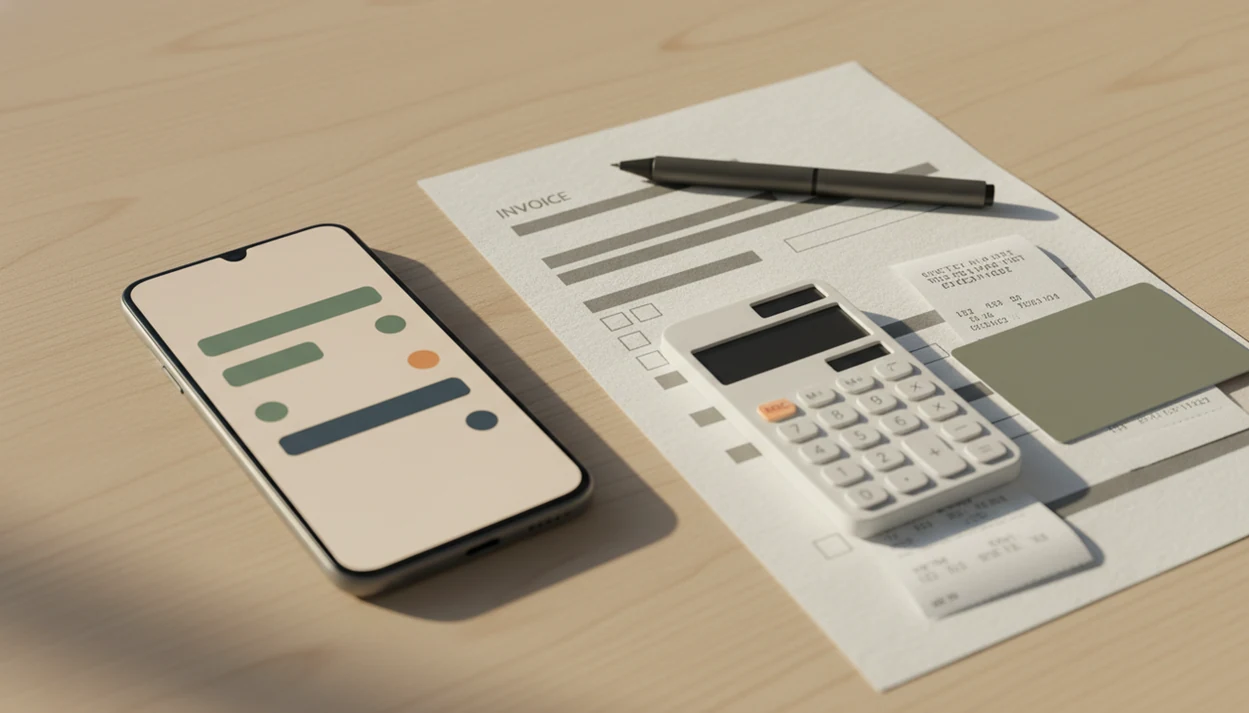
The fastest way to learn how to make invoice on Android is to use an Android invoice app, enter your business and client details, add line items, set taxes and due dates, then send the invoice as a PDF or payment link. A good mobile workflow also lets you track whether the invoice is draft, sent, viewed, paid, or overdue.
Definition: Invoice Maker Teo is an invoice maker app that creates invoices, estimates, PDFs, reminders, and payment tracking for freelancers and small businesses. For Android users, Invoice Maker Teo fits this workflow by combining client records, invoice templates, PDF sharing, estimates, reminders, and unpaid-status tracking in one mobile app.
TL;DR
- Use an Android invoice app for the fastest workflow: client records, templates, automatic invoice numbers, PDF export, and payment tracking.
- Every invoice should include your business details, client details, invoice number, invoice date, due date, itemized charges, taxes, total, and payment instructions.
- After sending the invoice, check payment status from your phone and use reminders for unpaid or overdue invoices.
What an Android Invoice Must Include
An invoice made on Android is valid when it includes the same structured billing fields as an invoice made on a desktop. The device does not make the invoice professional; the information on the document does.
A complete Android invoice should include your business name, client name, invoice number, invoice date, due date, line items, taxes, discounts, total, and payment instructions. If you bill from a work van or a client hallway, those fields still matter.
Screenshots and plain text messages are weaker because they are harder to track, search, print, and hand to a bookkeeper. A PDF copy with a stable invoice number is easier to resend when a client says, “Can you send that again?”
Tax rates, currency, and required legal wording may vary by location, so check local rules when needed.
Before You Create an Invoice on Android
Before you create invoice on Android, gather the details that will become reusable records. That small setup step keeps the next invoice easy.
- Business details: Save your business name, address, email, phone number, logo, and payment instructions.
- Client details: Add the client’s billing name, email, phone number, address, and any job notes.
- Work details: Prepare service or product descriptions, rates, quantities, discounts, and tax settings.
- Tool choice: Use a dedicated Android invoice app or a Google Sheets invoice template if you only invoice occasionally.
- Mobile fit: Freelancers, contractors, trades, consultants, and small businesses benefit because billing can happen right after the work is done.
Pew reported that U.S. workers were self-employed or in the independent workforce in 2021, a group that often bills outside a payroll system. McKinsey also reported that small businesses said digital tools helped them run more efficiently.
How Android Invoice Apps Work Behind the Scenes
Android invoice apps work by storing reusable billing data, then combining that data with fresh line items to generate a numbered invoice. In plain terms, the app remembers your business, clients, services, taxes, and payment settings so you do not rebuild the document each time.
The workflow is template generation plus status tracking. The app pulls from saved business records and client records, adds today’s services or products, applies tax and discount rules, and creates an invoice number. Then it exports a PDF copy, opens sharing options like Gmail, Outlook, WhatsApp, SMS, or Messages, and may add a payment link if your provider supports it.
Status labels turn the invoice into a record, not just a file. Draft, sent, viewed, paid, unpaid, and overdue labels help you follow what happened. Some apps also support cloud sync, backups, and offline drafting.
How to Use an Android Invoice App Step by Step
To use an Android invoice app, set up the saved records first, then create the invoice, review the preview, and send a PDF or link from your phone. Tools like Invoice Maker Teo, Invoice2go, Zoho Invoice, and similar apps follow this basic mobile invoice workflow.
- Install or open your Android invoice app and choose a new invoice template.
- Add your business details, logo, contact information, and payment instructions.
- Create a client record with the billing name, email, phone number, and address.
- Enter each service or product as a line item with quantity, price, discount, and tax.
- Set the invoice date, due date, currency, tax rate, and invoice number.
- Review and send the PDF preview through email, WhatsApp, SMS, or a payment link if supported.
For a phone-specific overview beyond Android, the related guide on how to make invoice on phone covers similar steps for mobile billing.
Step 1: Set Business and Client Records in an Android Invoice App
Start by entering your business name, address, email, phone number, logo, and payment details. Put the logo at the top, payment terms in the notes field, and bank or payment instructions where the client can find them.
Next, add the client name, billing address, email, phone number, and notes. The spelling matters. One client name written two different ways can make later searching messy.
Saved records speed up repeat invoices because you can select the client instead of typing the same billing details again. For repeat work, such as a monthly maintenance visit or design milestone, this also reduces delivery errors and payment disputes. A clean client record is boring, but useful.
Step 2: Add Services, Products, Taxes, and Invoice Totals
Add each service or product as a separate line item, not one vague block. Each row should show the description, quantity, unit price, discount, tax, subtotal, and final total.
Clear descriptions reduce back-and-forth. “Kitchen faucet replacement, labor and parts” is stronger than “job,” especially when the client reviews the bill two weeks later. If you use estimates first, a best estimate maker app can help you turn quoted work into invoice line items without retyping everything.
Some Android invoice apps support saved items, multiple currencies, and tax presets. That helps when you bill the same service often. However, complex tax rules, VAT treatment, exemptions, or cross-border invoices should be checked manually or reviewed by an accountant.
A good invoice maker app for freelancers and small businesses can create, send, and track invoices and estimates, but it does not replace legal, tax, or accounting advice.
Step 3: Send an Android Invoice as a PDF or Payment Link
Can you send an Android invoice as a PDF or payment link? Yes, after you review the invoice number, dates, client name, line items, taxes, total, and payment instructions.
Export the invoice as a PDF copy or share it directly through Gmail, Outlook, WhatsApp, SMS, or another messaging app. The phone-specific sending process is covered in more detail in our guide on how to send invoice with phone. Payment links can also be added when your invoice app and payment provider support them.
The PDF matters. It gives both sides a stable record that looks the same after delivery, unlike a screenshot that can crop totals or hide payment terms. Many clients already use mobile or digital channels for everyday financial tasks, so PDF delivery and payment links usually match familiar payment behavior.
Step 4: Track Unpaid Invoice Status on Android
Unpaid invoice tracking on Android helps you follow up without digging through email threads. It is the main advantage a dedicated app has over a static template.
- Draft: The invoice is started but not sent.
- Sent: The invoice has been shared with the client.
- Viewed: The client may have opened it, depending on app and email tracking support.
- Unpaid or partially paid: Money is still outstanding.
- Paid or overdue: The invoice is either settled or past its due date.
A freelancer can check unpaid status on a phone after a client says, “Can you resend that invoice?” No laptop needed.
Intuit reported that 69% of small business owners said late payments created cash-flow problems. The Federal Reserve also found that 81% of employer firms used digital tools for financial operations such as invoicing, accounting, and payments in its 2022 survey source.
Android Invoice App vs Google Sheets Invoice Template
Google Sheets can work for basic Android invoices, but it requires more manual setup. A dedicated app is usually better for repeat invoicing and tracking unpaid invoices because the records, numbers, PDFs, and reminders stay connected.
| Feature | Android invoice app | Google Sheets invoice template |
|---|---|---|
| Speed | Faster after setup | Slower on a phone |
| Invoice numbering | Often automatic | Usually manual |
| PDF export | Built into workflow | Possible, but manual |
| Client records | Saved and reusable | Must be copied or typed |
| Payment tracking | Status labels in app | Manual notes or columns |
| Reminders | Often supported | Manual follow-up |
| Offline drafting | Supported in some apps | Depends on Sheets settings |
| Backup | App or cloud sync options | Google Drive storage |
For repeat clients, an invoice maker app for Android keeps the client record, payment status, and PDF copy in one place. Sheets is fine when you send only a few invoices.
Common Android Invoice Mistakes That Delay Payment
These Android invoice mistakes often delay payment because they make the bill harder to approve, search, or pay.
- Missing invoice number or due date: The client cannot match the bill to a payment cycle.
- Vague line items: Labels like “work completed” invite questions and slow approval.
- Wrong client details: A mistyped email or billing name can send the invoice to the wrong place.
- Missing tax, discount, deposit, or partial payment notes: The total looks wrong even when the math is right.
- Screenshot-only delivery: A screenshot is easy to lose and harder to file than a PDF.
- No saved record: If the phone breaks or the app is deleted, the invoice history may be gone.
The project folder named final final is funny until the unpaid invoice is in there too.
Android Invoice Verification Before You Tap Send
Before you tap send, run a short verification checklist on the phone screen. Small errors on mobile are easy to miss, especially when the PDF attachment is loading over a weak signal.
Check:
- Business name, address, email, phone number, and logo
- Client name, billing address, email, and phone number
- Invoice number, invoice date, and due date
- Service or product descriptions, quantities, prices, and discounts
- Tax line, subtotal, total, and payment instructions
- PDF preview, including page breaks and logo placement
- Saved invoice record, export location, or backup status
- Status tracking, if the app supports sent, viewed, paid, and overdue labels
For freelancers who invoice often, a final preview is usually faster than correcting an invoice after the client has already forwarded it for approval.
Limitations
Android mobile invoicing is useful, but it has real limits. Treat the app as a billing workflow, not a substitute for professional advice.
- Not every Android invoice app supports every tax rule, language, currency, or payment method.
- Complex cross-border invoices may need accountant review before sending.
- Free apps may include invoice limits, ads, watermarks, locked features, or paid upgrades.
- A lost, broken, or stolen phone can risk invoice records if backup is not enabled.
- Offline invoices may not sync, send, or update payment status until the phone reconnects.
- Viewed status does not always prove the client agrees with the invoice.
- Payment links depend on third-party payment provider availability, account approval, and fees.
- App exports should still be checked before sharing with a bookkeeper or accountant.
If you also invoice from Apple devices, the Android workflow differs from how to make invoice on iPhone, mainly in sharing menus, file storage, and app behavior.
FAQ
Can I create an invoice from an Android phone?
Yes. You can create a professional invoice from an Android phone using an Android invoice app or a spreadsheet template.
What is an Android invoice app?
An Android invoice app is a mobile app that lets you create invoices, save client records, export PDFs, and track payment status from an Android device.
Can I make invoices for free on Android?
Yes. Some Android invoice apps and Google Sheets templates are free, but they may include limits, ads, watermarks, or paid upgrades.
Can Google Sheets make invoices on Android?
Yes. Google Sheets can open invoice templates on Android, but numbering, PDF export, reminders, and tracking are more manual than in a dedicated app.
How do I send invoice PDFs from Android?
Export or preview the invoice as a PDF, then share it through email, WhatsApp, SMS, or another Android sharing option.
Can I track unpaid invoices on Android?
Yes. Many Android invoice apps, including Invoice Maker Teo, support payment status labels and reminders for unpaid or overdue invoices.
Do Android invoices need unique invoice numbers?
Yes. Unique invoice numbers help organize records, match payments, avoid duplicates, and answer client questions.
Are invoices made on a phone professional?
Yes. Phone-made invoices are professional when they include complete structured fields, clear totals, payment terms, and a stable PDF copy.