Invoice App Privacy For Customer And Business Data
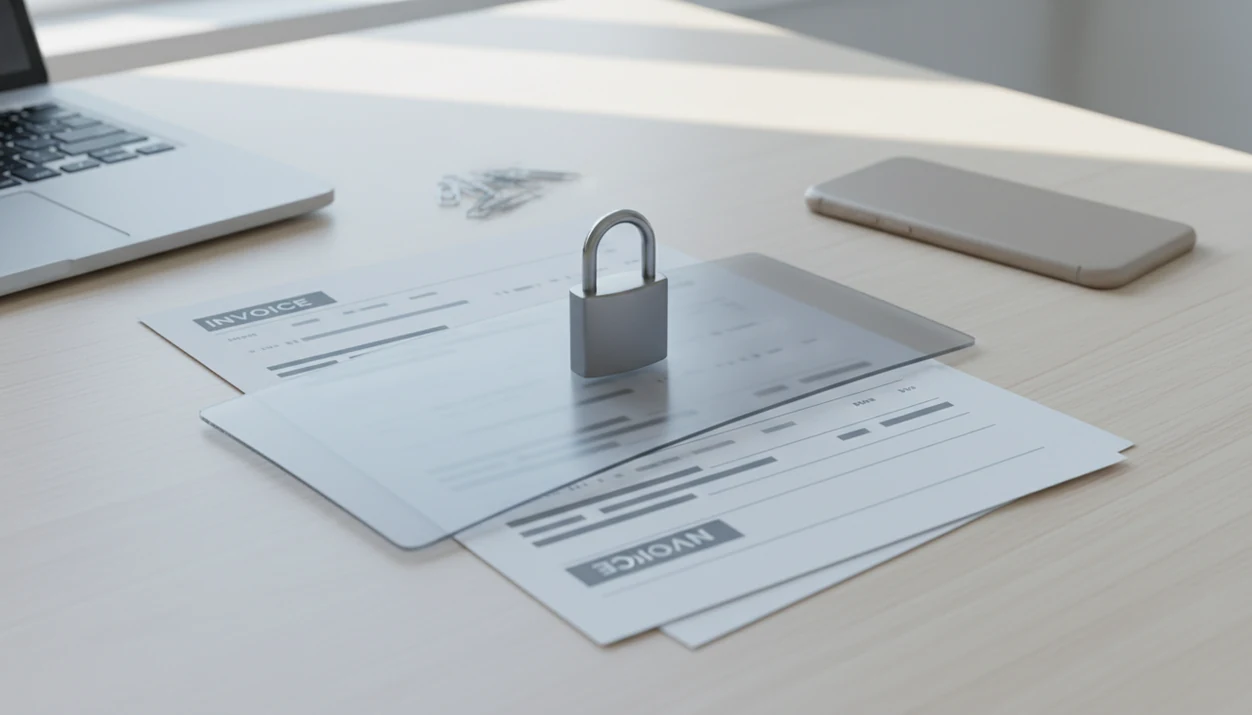
Invoice app privacy means protecting the customer names, emails, addresses, service details, prices, invoice history, payment status, exports, and account data stored in an invoicing app. For freelancers and small businesses, the main question is who can access invoice data, how it is secured, how long it is kept, and how it can be exported or deleted.
Definition: Invoice Maker Teo is an invoice maker app that creates invoices, estimates, PDFs, reminders, and payment tracking for freelancers and small businesses.
TL;DR
- Invoices often contain personal data, not just harmless business records.
- Freelancers and small businesses usually remain responsible for customer data invoicing decisions even when an app stores or processes the records.
- Good invoice data privacy depends on practical controls: encryption, access limits, deletion options, exports, retention rules, and clear third-party disclosures.
Invoice App Privacy At A Glance For Customer Data Invoicing
Invoice app privacy is the way an invoicing app collects, stores, protects, shares, exports, and deletes invoice-related data. It covers customer identity, contact details, invoice line items, totals, tax labels, payment status, notes, PDFs, exports, and account metadata.
That matters because invoices can identify real people. A cleaner billing a homeowner, a consultant billing a founder, or a repair professional listing a service address may all be handling personal information. In 2023, 68% of U.S. small businesses reported handling or storing PII, according to an FDIC small business cybersecurity survey source.
Privacy is not the same as general app security. Security asks whether systems are protected from misuse. Privacy asks whether the data is collected fairly, used for clear purposes, retained only as needed, and shared properly.
Small details count.
This page is informational. It is not legal advice for GDPR, CCPA, tax records, or industry-specific rules.
Five Invoice Data Privacy Facts Freelancers Should Know
- Invoices can contain regulated personal data. An invoice that identifies a customer by name, address, email, phone number, or service location may fall under privacy laws.
- The business often stays responsible. A freelancer or small business commonly acts as the data controller, while the invoice app provider commonly acts as a processor.
- Privacy depends on technical safeguards. TLS, encryption at rest, access control, logging, and security testing support invoice data privacy.
- Customer rights may apply. Depending on location and law, customers may request access, correction, deletion, or portability of invoice records.
- Cloud invoicing can involve other vendors. Hosting, analytics, support, payment, and app store systems may process limited data, sometimes across borders.
A missing invoice number slows payment. A misspelled client name can also become a privacy and records problem if the customer later asks for a copy.
How Invoice App Privacy Works Behind The Scenes
Invoice app privacy works through a data flow: account setup, customer entry, invoice or estimate creation, PDF generation, sending, reminders, payment status tracking, backups, exports, and deletion. Each step creates a record or event that may need protection.
The data usually splits into several groups. First-party app data includes the user account and settings. Customer invoice data includes names, addresses, line items, due dates, totals, notes, and PDFs. Device data may include app version, operating system, and crash information. Support data can include screenshots or messages sent to help desks. Analytics data may show which screens are used.
Cloud-based invoicing may store records on third-party infrastructure. Most invoice apps are not end-to-end encrypted, so restricted operational access may exist for support, security, fraud prevention, or maintenance.
The practical goal is a mobile invoice workflow, not a full accounting suite. You create the estimate, turn it into an invoice, export a clean PDF, and know what happened next.
Customer Data Invoicing Records That Need Privacy Protection
Customer data invoicing records need privacy protection when they identify a person, business contact, job site, service request, or payment relationship. Estimates often need the same care because they collect customer details before the work is approved.
- Identity fields: customer names, company names, emails, phone numbers, billing addresses, and service addresses.
- Work fields: project descriptions, itemized services, quantities, rates, discounts, payment terms, due dates, and notes.
- Financial fields: totals, tax labels, tax identifiers where used, payment status, and outstanding balances.
- Document fields: invoice PDFs, estimate PDFs, exports, attachments, and customer messages.
Service descriptions can reveal more than a price. “Garage outlet tested before quoting” is ordinary for an electrician, but it still links a person, location, and repair need. Designers, cleaners, consultants, and repair professionals all create similar context in line items.
Payment status tracking is different from storing full card or bank details. If payments are handled by a payment provider, the invoice app may show paid, unpaid, or overdue without storing complete payment credentials. For payment-specific risk, read our guide to PCI compliance for invoice payments.
Invoice App Privacy Roles: Controller, Processor, And Customer Rights
Who is responsible for invoice app privacy? In many privacy frameworks, the business deciding why and how customer invoice data is collected is the controller, and the app provider handling that data on the business’s behalf is the processor.
Using an app does not automatically move all responsibility away from the freelancer or small business. If you decide to collect a customer’s email, service address, tax label, and payment terms, you usually still need a lawful reason, a clear workflow, and a way to respond when the customer asks about the record.
Customer rights map directly to invoice work. Access may mean sending a PDF copy. Correction may mean fixing a wrong billing address or client name spelled two ways. Deletion may apply where allowed, but disputes or recordkeeping duties can limit it. Portability may mean exporting invoice data in a usable format.
In a 2022 European Commission SME survey, 48% of SMEs reported that they had implemented GDPR measures, while 28% were still implementing them source. Laws vary by jurisdiction, so local advice matters.
Security Controls That Support Invoice Data Privacy
Security controls support invoice data privacy by reducing who can see, change, lose, or misuse invoice records. They do not replace privacy duties, but weak security can turn a normal unpaid invoice into exposed customer data.
Encryption And Storage Controls
| Control | What it protects | What to check |
|---|---|---|
| TLS | Data moving between the app and servers | The app uses encrypted connections for login, invoice sync, and PDF actions |
| Encryption at rest | Stored invoice records and files | Data is encrypted in storage where available |
| Backups | Recovery after loss or outage | Backup retention and deletion timing are explained |
| PDF handling | Exported invoice copies | Files are protected after download or sharing |
A phone balanced on a paint bucket is still a billing desk. If the PDF is exported there, the device lock matters.
Access And Incident Controls
| Control | What it protects | What to check |
|---|---|---|
| Authentication | Account access | Strong passwords, passcodes, and account recovery controls |
| Device or role limits | Shared work access | Supported limits for staff, devices, or users |
| Logging | Suspicious activity | Operational logs or audit trails where available |
| Testing and response | Breach readiness | Security testing and incident response procedures |
Small-business cyber incidents are common enough that invoice records should be treated as sensitive operational data, not routine paperwork. For more technical detail, compare this with our secure invoice maker app guide.
Retention, Deletion, And Export Rules For Invoice App Privacy
Retention is how long invoice records, PDFs, backups, logs, and account data are kept. Deletion is the process for removing data from active systems and, sometimes later, backup systems. Export is the way users download invoice records or PDF copies for business continuity, customer requests, or bookkeeping.
The hard part is balance. A customer may ask for deletion, but a business may still need records for payment disputes, warranties, chargebacks, ordinary bookkeeping, or legal obligations. That is not tax advice. It is a practical reason to read both the app policy and your own recordkeeping requirements.
Exports deserve special care. Once a PDF lands in a downloads folder, cloud drive, or text thread, app-level controls may no longer protect it. The file named “invoice new version” sitting on a personal laptop can create more risk than the app itself.
For many small teams, a monthly export check is easier than searching last year’s customer tab after someone asks for a copy.
Third Parties, Cloud Storage, And Cross-Border Invoice Data Privacy
Third parties may support invoice app operations without owning the customer relationship. Common categories include cloud hosting, email delivery, analytics, crash reporting, customer support tools, payment providers, and app store platforms.
These providers may process limited data to keep the app running, send messages, detect errors, answer support requests, or process payments. That does not usually mean they decide why your customer invoice exists. It does mean their role should be disclosed clearly.
Cross-border transfers can add legal duties. Depending on the law, businesses may need data processing agreements, standard contractual clauses, or privacy notice language that explains where invoice data may be processed. The European Data Protection Board reported over 98,400 GDPR personal data breach notifications in 2023 source, which is useful context for online business tools that store customer records.
Do not assume the vendor list. Unless a provider is named in a verified policy or subprocessors page, treat it as unconfirmed.
Privacy Expectations For Small Business Invoicing
An invoice maker app for freelancers and small businesses should explain what data it collects, why it uses that data, how users can export records, how deletion requests work, and which third parties may process invoice-related information.
A good invoice maker app for freelancers and small businesses should help create, send, and track invoices and estimates, not replace legal advice, tax filing, or a formal compliance determination.
A mobile invoicing workflow usually looks simple: create an estimate on site, turn it into an invoice, review the PDF, send it, and track payment status. The user still has responsibilities. Use a strong password. Check the recipient email before sending. Review the logo, tax line, notes field, and due date before exporting. Secure downloaded files after they leave the app.
The curb check is real. One wrong recipient in a messaging app can expose a customer’s service address, price, and job notes. For PDF delivery risk, use our email invoice safety checklist.
When To Get Privacy Or Legal Help For Invoice Data
Get privacy or legal help when an invoice-data question affects rights, retention duties, cross-border processing, or a possible exposure. General privacy education can help you spot risk, but it cannot decide jurisdiction-specific compliance for your business.
Some requests are simple, such as correcting a spelling error or sending a copy of an invoice to the verified customer. Others need review because privacy rights and business records can point in different directions. A deletion request may conflict with tax retention, bookkeeping, fraud prevention, or an open payment dispute. Access and portability requests can also raise identity-check, format, and third-party-data questions.
A practical escalation path looks like this:
- Pause automatic deletion or export when the request involves GDPR, CCPA, tax records, litigation, or a customer in another country.
- Document what was requested, who made the request, what records are involved, and any deadline you believe applies.
- Review whether invoices include another person’s data, employee notes, payment disputes, or records your accountant says you must keep.
- Ask a qualified privacy, legal, or tax professional before responding when laws or retention duties conflict.
- Escalate quickly after a suspected breach, exposed export, hacked account, or invoice sent to the wrong recipient.
Limitations
No invoice app can eliminate every privacy or breach risk. The app can reduce exposure, but the user, device, recipient, network, and exported files all affect the result.
- Most invoicing tools are not end-to-end encrypted, so restricted operational access may exist.
- A privacy policy alone does not satisfy every business’s legal duties.
- Exports, screenshots, emailed PDFs, and downloaded files can escape app-level controls.
- Weak passwords, shared devices, and misaddressed emails can expose invoice data.
- Deletion may be limited by backups, dispute records, legal retention requirements, or fraud prevention needs.
- Privacy laws differ by jurisdiction and change over time.
- App store availability or a recognizable brand does not prove a specific encryption model.
- Payment status is not the same as full payment data storage, especially when a payment processor is involved.
A privacy review is not a one-time setup task. Recheck it when you add staff, change devices, start sending reminders, or export records to a bookkeeper. If invoice impersonation is part of your concern, the related issue is how to prevent invoice fraud.
FAQ
Is invoice data personal data?
Invoice data is personal data when it identifies or can reasonably identify a person, such as through a name, email, phone number, billing address, service address, or job description. Whether a privacy law applies depends on the jurisdiction and context.
Do invoice apps store customer data?
Most invoice apps store customer data such as names, contact details, invoice numbers, line items, totals, notes, payment status, PDFs, and account metadata. Cloud-based apps may also store backups, logs, support messages, and export records.
Are invoice apps GDPR compliant?
An invoice app is not automatically GDPR compliant for every business use case. Compliance depends on the app, the business using it, contracts, privacy notices, data handling workflows, and the applicable jurisdiction.
Can customers request invoice deletion?
Customers may be able to request invoice deletion under some privacy laws. Deletion can be limited by payment disputes, fraud prevention, backups, legal retention duties, or other legitimate business record needs.
Who owns invoice customer data?
In many workflows, the freelancer or small business controls the customer invoice data, while the app provider processes it to provide the service. Ownership and control can also be affected by contracts and local law.
Are invoice PDFs private?
Invoice PDFs are private when they contain customer names, addresses, service details, prices, tax labels, or payment terms. They become riskier when emailed, downloaded, screenshotted, stored on shared devices, or sent to the wrong recipient.
Do invoice apps share data?
Invoice apps may share limited data with service providers for hosting, email delivery, analytics, crash reporting, customer support, payment processing, app store operations, or legal compliance. A privacy notice should explain the categories and purposes.
How long are invoices stored?
Invoice storage depends on the app’s retention policy, account status, backups, exports, and deletion process. Businesses may also need to keep invoice records for disputes, bookkeeping, legal obligations, or customer service needs.