Discover Late Payment Patterns in Client Invoice History
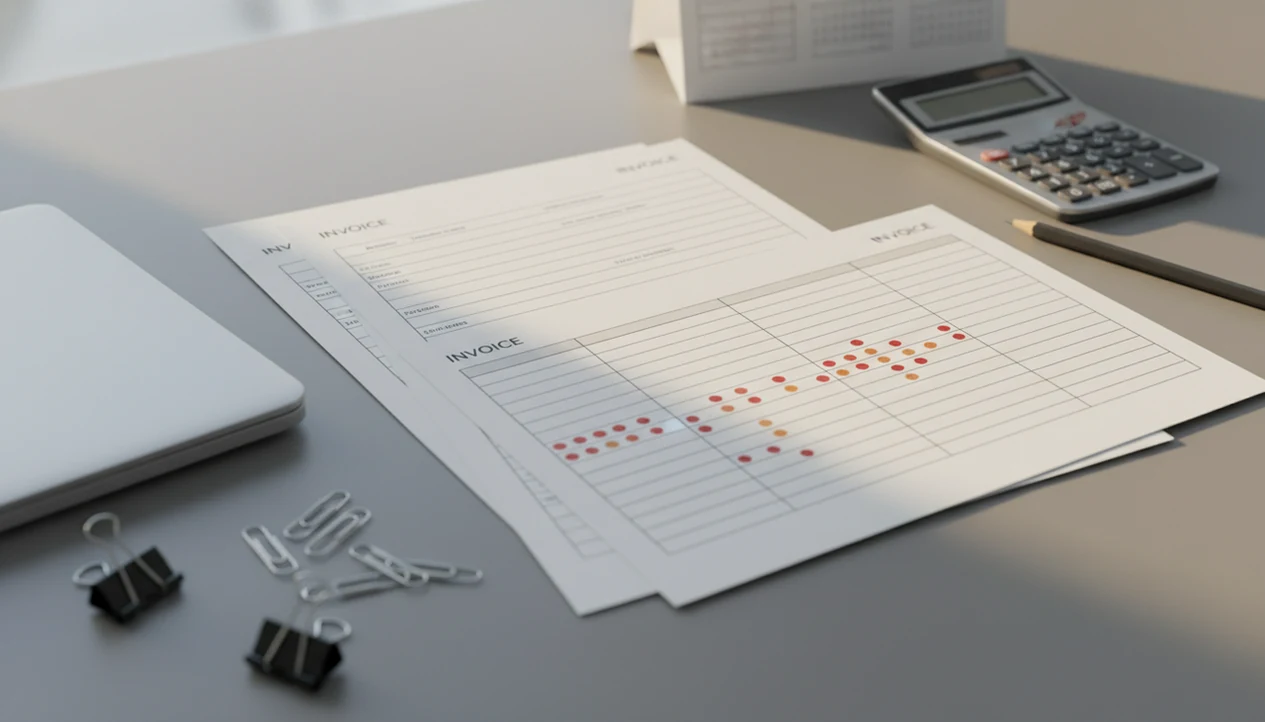
To discover late payment patterns, review each client’s invoice history for repeated missed due dates, unpaid balances, reminder timing, and days-late behavior before sending the next invoice. The goal is to spot recurring payment risk early, not to label every one-off delay as a bad client.
> Invoice history works best when invoices, due dates, reminder dates, balances, and payment status stay in one record instead of scattered across email threads.
TL;DR
- Late-payment patterns show up when the same client, invoice type, amount range, or due-date window is repeatedly paid after terms.
- Client payment history is most useful when it compares due dates, payment dates, reminder dates, invoice amounts, and unpaid balances.
- Pattern detection should lead to earlier action, such as shorter terms, deposits, faster reminders, or a follow-up flag before the next invoice.
Late Payment Pattern Signals in Client Invoice History
Late-payment patterns are repeated invoice behaviors across client history, not a single overdue invoice. A useful pattern shows that the same client, invoice size, project type, or due-date window keeps slipping past terms.
The 2024 Atradius U.S. B2B Payment Practices Barometer reported that roughly 87% of surveyed private-sector businesses had at least one past-due invoice, with an average delay of about 44 days beyond terms, and 55% said late payments had increased over the prior year (https://group.atradius.com/publications/payment-practices-barometer.html). For broader cash-flow context, the Federal Reserve’s Small Business Credit Survey tracks how payment delays and operating expenses affect small firms’ financial health (https://www.fedsmallbusiness.org/survey).
That matters more when you run a small shop. One unpaid $1,400 service invoice can block materials, rent, or subcontractor payments. An aged invoice list beside a calendar tells you more than a vague memory of “they usually pay late.”
Pattern review turns that memory into a billing habit. For freelancers and small businesses, repeated days-late behavior is often the earliest practical warning sign.
Five Facts About Late Payment Trends Before the Next Invoice
- Pattern detection identifies repeat late payers before the next invoice becomes overdue again.
- Client payment history reveals behavior a single invoice cannot show, especially when the same delay repeats across months.
- Useful tracking fields include due date, payment date, reminder date, invoice amount, unpaid balance, and days late.
- A one-off late payment may come from a weekend, approval delay, missing purchase order, or temporary cash-flow issue.
- The practical outcome is earlier action, such as deposits, shorter terms, faster reminders, or a follow-up flag before sending.
A client who pays 11 days late three times deserves a different workflow than a client who missed once during a holiday week. The invoice number checked against last month can show whether the delay is new or becoming routine.
For small businesses, late payment trends are often easier to spot in invoice records than in email threads because the dates sit next to the balance. The paid invoice opened at the counter gives you one result; the client history gives you the pattern.
How Late Payment Pattern Detection Works
Late payment pattern detection works by converting invoice records into repeatable payment signals: due date, reminder date, payment date, unpaid balance, and days late. The simple calculation is payment date minus due date; the business meaning comes from seeing that number repeat.
In invoice aging terms, an unpaid invoice moves from current to past due, then into buckets such as 15, 30, or 45 days late. That sounds technical, but it just means you can see how long money has been waiting.
Patterns become useful when grouped by client, amount, due-date window, project type, or invoice age. A designer may learn that fixed monthly retainers pay on time, but large milestone invoices sit for two extra weeks. A landscaper may see delays after rain-heavy weeks when approvals pile up.
The signal predicts risk based on past behavior. It does not prove intent. For freelancers, comparing history in an invoice payment tracking app is often clearer than searching sent mail because the due date and payment status stay beside the PDF record.
How to Use Client Payment History to Discover Late Payment Patterns
Use client payment history by reviewing a fixed period, calculating days late, and grouping repeated delays before the next invoice goes out. Keep the review narrow enough that you’ll actually finish it.
- Set a review period, such as the last 3, 6, or 12 months of invoices.
- Log each invoice’s issue date, due date, reminder date, payment date, amount, and unpaid balance.
- Calculate days late by subtracting the due date from the actual payment date.
- Group the results by client, then scan for repeated delays by amount size, project type, or due-date window.
- Reset invoice terms, reminder timing, deposits, or follow-up notes before creating the next invoice.
Small detail, big difference.
If a client says, “Can you resend that invoice?”, check the unpaid status before forwarding another PDF copy. The old version may have yesterday’s copied due date or a missing invoice number. Fixing that now keeps the next invoice easy.
Invoice History Fields That Reveal Late Payment Trends
The strongest late-payment review compares due dates with payment dates, then adds amount, balance, reminder timing, and notes. Each field answers a different question about why payment slowed down.
| Invoice history field | What it reveals | Practical use |
|---|---|---|
| Due date vs. payment date | How many days late each invoice was | Measure delay instead of guessing |
| Invoice amount | Whether larger invoices sit longer | Ask for deposits on higher-value work |
| Unpaid balance | How much cash is still waiting | Prioritize follow-up by amount and age |
| Reminder date | Whether reminders were late, too few, or ignored | Move reminders earlier |
| Client name and status | Which customers repeat the same behavior | Flag before the next invoice |
| Project type and notes | Disputes, approvals, or missing purchase orders | Fix process issues before billing |
A phone balanced on a paint bucket is not where you want to rebuild history from scratch. Save the client record, line items, due date, and notes when the invoice is created. If you also need to see unpaid invoices, the status view should match the invoice history.
Common Client Payment History Patterns Worth Flagging
Some late payment trends deserve a follow-up flag before the next invoice is created. The point is not to punish the client; it is to adjust the billing workflow before the same delay repeats.
Repeat monthly late payers: These clients miss similar due dates every month, often by the same number of days. A due date on the 30th may work poorly if their approval run happens on the 10th.
Amount-based delays: Larger invoices may sit unpaid longer than smaller ones. That pattern often supports deposits, milestone billing, or split invoices.
Reminder-dependent clients: Some clients pay only after a second or final reminder. If that keeps happening, the first reminder is probably too late.
Aging balance repeaters: These invoices repeatedly cross 15, 30, or 45 days past due. Use an aged list and check overdue invoices before sending more work.
Seasonal or approval-related delays: These delays may cluster near holidays, fiscal close, or manager approval weeks. Not bad intent. Still worth planning around.
Invoice Actions After You Discover Late Payment Patterns
After you discover a repeat delay, change the next invoice workflow rather than waiting for another overdue balance. The best response depends on the pattern: reminder timing, payment terms, deposit rules, billing contact, or approval steps.
For near-due and past-due repeaters, send reminders earlier. A reminder three days before the due date can work better than a first message sent after the invoice is already aging. For clients with consistent delays, consider shorter terms, a deposit, or milestone billing before more work begins.
Late-payment fees may be useful when your terms, signed agreement, and local rules allow them. The 2024 B2B survey found that many firms use late-payment fees or collection-related practices, but policy should never surprise the client after the fact.
Confirm the billing contact, purchase order, and approval route before sending the PDF. A mobile invoice maker app can help create invoices, PDFs, reminders, and payment tracking; if you need full bookkeeping, reconciliation, or payroll, compare broader systems such as QuickBooks, FreshBooks, or Wave instead.
Good invoice maker apps for freelancers and small businesses create, send, and track invoices and estimates, not replace signed terms, client communication, or professional bookkeeping.
What Late Payment Trends Do Not Prove
Late payment trends do not prove bad intent, permanent unreliability, or a client’s full financial condition. They show invoice behavior in your records, which is useful but incomplete.
Weekends, holidays, internal approval chains, disputed work, missing purchase orders, and seasonal cash-flow issues can all delay payment. A customer address copied from a text may be correct, but a missing department code can still stall approval for two weeks.
Small samples can mislead. One or two invoices are usually not enough to label a client as high risk, especially if the project type changed. A $250 repair invoice and a $9,000 build-out invoice do not behave the same.
Predictive scores and risk labels only help when the invoice data is complete and consistent. If payment dates are missing, reminder dates were never logged, or partial payments were not recorded, the pattern may be noisy. If needed, review whether you also need to find partial payments before drawing conclusions.
Limitations
Late-payment pattern discovery is useful, but it has clear limits. Treat it as a billing signal, not a verdict.
- Pattern discovery is only as accurate as the invoice data entered.
- Missing due dates, payment dates, reminder records, or unpaid balances can distort results.
- A few late invoices may not be enough to identify a stable client pattern.
- Late-payment patterns do not prove intent or guarantee future payment behavior.
- Approval bottlenecks, disputed work, holidays, missing purchase orders, and seasonal cash flow can affect timing.
- Pattern detection does not replace clear payment terms, signed agreements, or consistent follow-up.
- Late fees and collection practices may depend on contract language and local rules.
- Manual spreadsheets can hide errors when client names are spelled two ways or invoice numbers are skipped.
Invoice apps can help keep invoice status, reminders, and PDF copies together. However, the business decision still belongs to you, especially when changing terms, pausing work, or escalating a collection issue.
FAQ
What are late payment patterns?
Late payment patterns are repeated invoice delays across a client’s payment history. They show up when the same client, amount type, or due-date window is paid late more than once.
How do I find repeat late payers?
Group invoices by client and compare each due date with the actual payment date. Clients with repeated days-late results should be reviewed before the next invoice.
What causes late payment trends?
Late payment trends can come from approval delays, weak reminders, unclear terms, disputed work, or client cash-flow issues. The pattern matters more than one isolated reason.
Is one late invoice a pattern?
One late invoice is usually not enough to prove a recurring pattern. Review more client payment history before changing terms or labeling the client as high risk.
Which invoice dates should I track?
Track the issue date, due date, reminder date, payment date, and overdue age. These dates show whether the invoice was late and when follow-up happened.
When should I send reminders?
Many freelancers send reminders before the due date, on the due date, and after the invoice becomes overdue. An app that sends payment reminders can help keep that timing consistent.
Should I request client deposits?
Deposits make sense when a client has repeated late-payment behavior or when a project requires larger upfront costs. Put deposit terms in writing before work begins.
Can invoice apps track late payments?
Yes, invoice apps can help track invoices, unpaid balances, reminders, and client payment history. Invoice Maker Teo supports mobile invoice workflows that include PDFs, reminders, and payment status tracking.