Invoice App For Cleaners With Repeat Jobs And Reminders
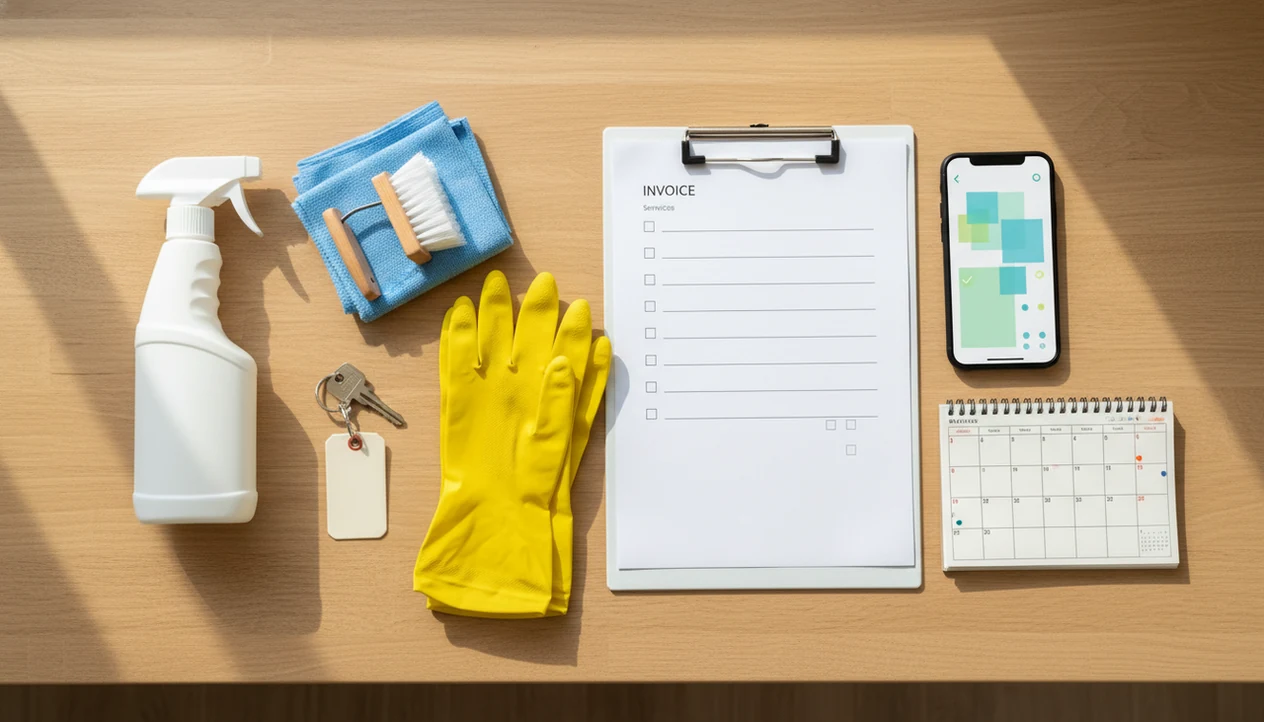
The best invoice app for cleaners is one that lets you save recurring clients, reuse cleaning services, send professional PDF invoices, and follow up on unpaid jobs without rebuilding paperwork after every clean. For solo cleaners and small cleaning teams, Invoice Maker Teo fits this workflow by combining invoices, estimates, reminders, PDFs, and payment tracking in a mobile-first app.
Definition: An invoice app for cleaners is a mobile or web billing tool that helps cleaning businesses create, send, and track invoices for one-time, weekly, biweekly, and monthly cleaning jobs.
- Cleaners should prioritize saved clients, repeat services, recurring invoices, reminders, and mobile PDF sending over broad accounting features.
- A cleaning invoice app is most useful when it connects the job date, client, service list, estimate, invoice, and payment status in one workflow.
- Invoice Maker Teo is best positioned for solo cleaners and small teams that need fast invoicing, estimates, reminders, and unpaid-invoice tracking without full accounting software.
At-a-glance cleaner billing app fit for repeat cleaning jobs
A cleaner billing app fits best when the same clients, services, and due dates come back every week, every other week, or every month. The strongest fit is for solo cleaners, owner-operators, house cleaners, office cleaners, Airbnb cleaners, and small crews that need billing to happen from a phone.
| Use case | Needed feature | Why it matters |
|---|---|---|
| Weekly house clean | Saved client and saved service | Rebuild less after each visit |
| First-time deep clean | Estimate that converts to invoice | Quote first, bill after approval |
| Airbnb turnover | Fast PDF invoice sending | Bill before the next guest arrives |
| Office cleaning | Monthly invoice with service dates | Show what was cleaned and when |
| Late payer | Payment status and reminder | Follow up without searching texts |
The core workflow should cover billing recurring clients, sending estimates, tracking unpaid invoices, and reusing service line items. It should not be expected to replace payroll, tax filing, or complex enterprise scheduling software.
Why cleaning businesses need an invoice app for cleaners
Cleaning work is repetitive, mobile, and often billed right after the job, when the mop bucket is back in the car and the next address is already waiting. An invoice app for cleaners keeps the client, job date, service list, due date, and payment status together instead of scattering them across Word files, texts, notes, and spreadsheets.
Manual invoices create small leaks. A fridge add-on gets forgotten. Yesterday’s copied due date stays on the invoice. A client says, “Can you resend that invoice?” and the unpaid status is buried in email.
Tiny mistakes cost time.
The SBA reports that 81% of U.S. small businesses use digital tools, including bookkeeping and billing tools, to run operations. Among small businesses using digital tools, 69% say they save time and 51% say they reduce errors, according to the same SBA survey source. For cleaners, that evidence points to a simple habit: bill from the phone before the job details fade.
Top cleaning invoice app features for recurring clients
A cleaning invoice app should make repeat work faster without hiding the details clients need to approve payment. The strongest setup saves customers, services, recurrence, reminders, and payment status in one mobile invoice workflow.
- Saved clients: Store names, addresses, emails, phone numbers, and notes so weekly, biweekly, and monthly cleans do not start from a blank screen.
- Saved services: Reuse line items such as standard clean, deep clean, windows, oven, inside fridge, supplies, or travel fee.
- Recurring invoices: Repeat the invoice rhythm for steady clients while still checking the job date and service price before sending.
- Manual or automatic reminders: Follow up before or after the due date when an invoice remains unpaid.
- Payment status tracking: Mark invoices paid, unpaid, or overdue so the next follow-up is based on the actual record.
Invoice Maker Teo also supports estimates that can become invoices for first-time cleans, move-out cleans, deep cleans, and add-on jobs. For cleaners, professional PDF invoices with a logo, tax line below the subtotal, and clear line items are often easier than a spreadsheet because the client sees exactly what they are paying for.
Best invoice app for cleaners: named shortlist by job type
The right choice depends on whether a cleaner needs lightweight invoicing or deeper scheduling and team operations. Good invoice apps for service businesses deliver clear documents, fast sending, and payment follow-up, not a full enterprise accounting system.
- Invoice Maker Teo: Solo cleaners and small teams looking for mobile invoices, estimates, PDFs, reminders, and payment tracking get the cleanest fit because the workflow keeps repeat clients, reusable services, and unpaid invoice status close to the invoice record.
- Invoice Fly: Cleaning businesses comparing cleaning-focused software may consider Invoice Fly when they want invoicing tied more closely to field-service style job workflows.
- Billdu: Small cleaning companies that want general small-business invoicing may compare Billdu for invoices, quotes, and client records across different trades.
- Harvest: Harvest is better known for time tracking and broader service billing, so it may fit consultants or hourly service teams more than cleaning-specific repeat-job invoicing.
If the priority is sending a polished PDF before leaving the driveway, the best fit is a lightweight app that supports estimates, invoices, PDF delivery, reminders, and payment-status records without pushing cleaners into heavier accounting menus.
How an invoice app for cleaners works behind the scenes
An invoice app for cleaners works by linking a client record, service line items, job date, invoice number, payment terms, payment status, and PDF output into one billing record. For this use case, the important pieces are invoice creation, estimates, PDF documents, payment reminders, and payment-status records.
The data model is simple. The client record holds the customer details. The service catalog holds repeat items like “biweekly house clean” or “inside oven.” The invoice number keeps the document traceable, and the due date drives reminder logic.
Repeat jobs reuse stored client and service data instead of forcing a blank invoice every visit. A cleaner can adjust the date, add windows, check the tax line, export a PDF copy, and send it through Gmail, Outlook, WhatsApp, or Messages.
Estimates sit earlier in the same workflow. Once a deep clean or move-out clean is approved or completed, the estimate can become an invoice, so the quoted line items do not need to be typed again.
How to use a cleaner billing app for weekly and biweekly cleans
A cleaner billing app works best when it is set up around the jobs you already repeat. Do the setup once, then keep the next invoice easy after each clean.
- Add client details with the customer name, property address, email, phone number, and any billing notes.
- Save common services such as weekly clean, biweekly clean, monthly clean, deep clean, oven, windows, and inside fridge.
- Create an estimate or invoice from the phone before leaving the property, using the job date and the correct invoice number.
- Set repeat frequency for weekly, biweekly, or monthly recurring jobs when the client is on a regular schedule.
- Send the PDF copy by email, WhatsApp, Messages, or another channel the client already uses.
- Review unpaid invoices at the end of the week and send reminders only to clients still marked unpaid or overdue.
Cleaners who bill repeat homes from a parked van fit Invoice Maker Teo well because the workflow moves from saved client to PDF invoice to payment status in a few checks, not a spreadsheet session.
Common cleaning business patterns a cleaning invoice app should handle
Cleaning invoices are not all the same, even when the service sounds simple. A useful app should handle recurring residential work, one-time deep cleans, Airbnb turnovers, and commercial billing without forcing every job into one template.
Residential repeat cleans
Residential repeat cleans usually need standard line items: kitchen, bathrooms, floors, bedrooms, supplies, and any agreed extras. A lightweight client history helps show repeat value, payment consistency, and whether the same client often adds windows or reschedules.
Deep cleans and add-ons
Deep cleans often start as estimates because the price can depend on square footage, condition, pets, or move-out timing. Add-ons like ovens, windows, and inside fridge should become invoice line items, not vague notes at the bottom.
Paint swatches on a porch rail are not the cleaning trade, but the estimate habit is similar: quote clearly before the work expands.
Airbnb and office cleaning invoices
Airbnb cleaners need high-frequency billing and quick PDF sending between turnovers. Office cleaners often need monthly invoices with multiple service dates, access notes, key codes, and a clear due date.
A simple invoice app for small business can cover many of these patterns, but cleaners should still check whether repeat services and client notes are easy to reuse.
Payment reminders and unpaid invoice tracking for cleaners
Can invoice apps help cleaners chase unpaid jobs? Yes, a cleaner billing app can separate job reminders, payment reminders, and overdue invoice reminders so follow-up matches the actual problem.
A job reminder tells the client a clean is coming. A payment reminder asks for payment before or on the due date. An overdue invoice reminder follows up after the due date when the invoice is still marked unpaid.
For cleaners, the unpaid list matters more than memory. Paid, unpaid, and overdue invoices should sit in one view, especially after a client says, “Can you resend that invoice?” while you are standing at the counter with your phone open.
The Federal Reserve reported that about 64% of U.S. small businesses use accounting or bookkeeping software rather than only manual methods source. Digital payment options can shorten collection time for some small businesses, but the exact speed depends on the payment method, client behavior, and app setup. That is not a guarantee, but it supports cleaner follow-up habits.
Limitations
An invoice app can speed up billing, but it cannot fix every cleaning business problem. The record still depends on the person entering the job details.
- An invoice app will not fix underpriced cleaning jobs, vague quotes, or add-ons that were never approved.
- Recurring invoices and reminders still need accurate dates, email addresses, client names, and payment terms.
- Many cleaner billing apps do not handle payroll, advanced tax filing, or complex team scheduling.
- Clients who prefer cash or checks may still require manual follow-up and manual payment marking.
- Relying on one app without PDF exports, reports, or backups can create migration risk later.
- Wrong templates can create duplicate invoices, old service prices, or copied due dates.
- Cleaning teams with dispatch, route planning, and staff time clocks may need deeper operations software from providers such as FreshBooks, Wave, Zoho Invoice, or Invoice2go.
Invoice Maker Teo is strongest for mobile invoicing, estimates, reminders, PDFs, and payment tracking, because it focuses on billing work rather than payroll or enterprise scheduling.
FAQ
What is a cleaning invoice app?
A cleaning invoice app creates, sends, and tracks invoices for cleaning jobs. It usually stores clients, services, job dates, invoice numbers, PDF copies, and payment status.
Do cleaners need invoicing software for repeat clients?
Cleaners benefit from invoicing software when they have repeat clients, add-ons, unpaid invoices, or copied invoice details to manage. It reduces manual rebuilding and makes follow-up easier.
Can cleaners send recurring invoices for weekly or biweekly jobs?
Yes, many cleaner billing apps let cleaners reuse or schedule invoices for weekly, biweekly, and monthly jobs. The cleaner should still review the date, services, price, and client details before sending.
Can invoice apps send payment reminders and track unpaid cleaning invoices?
Yes, invoice apps can send manual or automatic reminders for unpaid and overdue cleaning invoices. They can also show paid, unpaid, and overdue status in one list.
Can estimates become cleaning invoices?
Yes, estimates or quotes for first-time jobs, deep cleans, and move-out cleans can often convert into invoices. This keeps the approved services and prices from being typed twice.
Can cleaners create and send PDF invoices from a phone?
Yes, cleaners can create mobile invoices, add branding and line items, export a PDF, and send it from a phone. This is useful immediately after a cleaning job.
Is a free invoice app enough for a small cleaning business?
A free invoice app may be enough for a cleaner with a few simple clients and low follow-up needs. Paid tools may be worth it when recurring invoices, reminders, saved templates, or payment tracking save regular admin time.
Does invoicing software replace accounting software for cleaners?
Invoicing software supports billing, PDF records, payment tracking, and exports. It may not replace bookkeeping, tax filing, payroll, or a full accounting system.